NPG's complete guide to a successful trade show - based on 30+ years of experience
Strong brands are built through encounters with people. That's why physical meeting places are still among the most effective arenas for brand building, relationship development, positioning – and in many cases, sales.
This is where relationships and experiences are created that make the target audience experience and remember you – provided the opportunity is used correctly.
For many companies, trade fairs are an important part of the marketing plan, but the challenges are often the same: How to choose the right trade fair? How to develop a concept that works in practice? And how to ensure smooth implementation – especially internationally?
This guide is based on over 30 years of experience with complex trade fair projects at home and abroad, and gives you a clear framework for success.
1. Choose the right trade fair – how to assess the potential
Trade fairs require investment, and choosing a venue should be done strategically. You should consider the following:
1. Target group
Are you meeting the right people at this fair?
2. The competitive landscape
Who is exhibiting – and how can you differentiate yourself from the competition?
3. Strategic added value
Does the fair also provide opportunities in PR, partnerships, recruitment or positioning?
4. Cost/benefit
Is the potential realistic in terms of time, budget and expected results?
Many of our customers participate in several trade fairs annually, both nationally and internationally. What they have in common is the need for a partner who handles design, logistics and the whole thing.
2. Set specific goals
Clear goals make it easier to develop the right concept, measure impact, and make good decisions. It is important that you prioritize based on what is most important to your business.
Qualitative goals
It's about experiences, relationships and insights:
- Strengthen brand awareness
- Meeting new and existing customers
- Network building
- Presenting products and services
- Exploring new business opportunities
- Keep up with competitors
Quantitative measures
It's about numbers, measurements and KPIs:
- Increased engagement in social media
- PR and SoMe exposure
- Lead generation
- Sales opportunities (meetings, quotes, pipeline, demos)
3. The foundation for success: a good brief
The process starts with a brief meeting. Here we clarify:
- Why You are going to participate in the fair (what is the goal/goals).
- Whose You need to be in dialogue with them to achieve your goals.
- What Will they think/remember you after the mass?
- How did I Do you measure success?
We then go through practical needs: meeting rooms, catering, demo areas, presentations, storage space and activities. This forms the basis for space allocation and zoning.
We also review the brand platform, profile manual and desired positioning – so that the stand appears consistent and clear in relation to other brand and marketing activities the company carries out.
Finally, we align the budget and ambition level, so that the process starts correctly and runs efficiently.
4. Concept and idea
Once the brief is in place, the project manager sets a schedule and gathers technical information such as hall maps and organizer information. We prepare a requirements specification that describes functions, sizes and needs.
Based on this, we develop a concept that ensures you stand out and achieve the goals of the trade fair.
The concept includes:
Core message – what the target audience should remember.
- Experience design – what emotions and interactions should be created.
- Visual direction – colors, shapes, materials and zones.
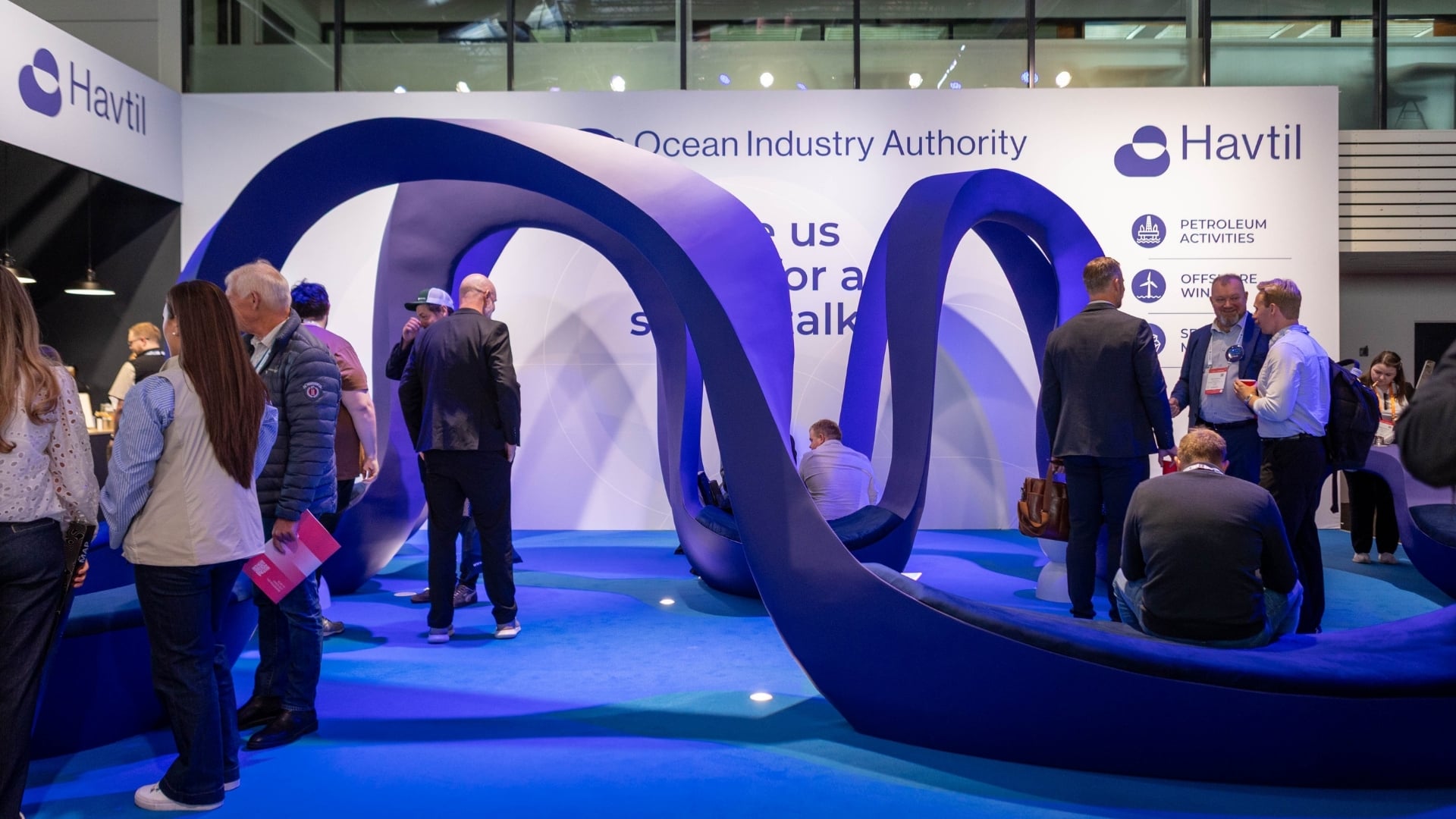
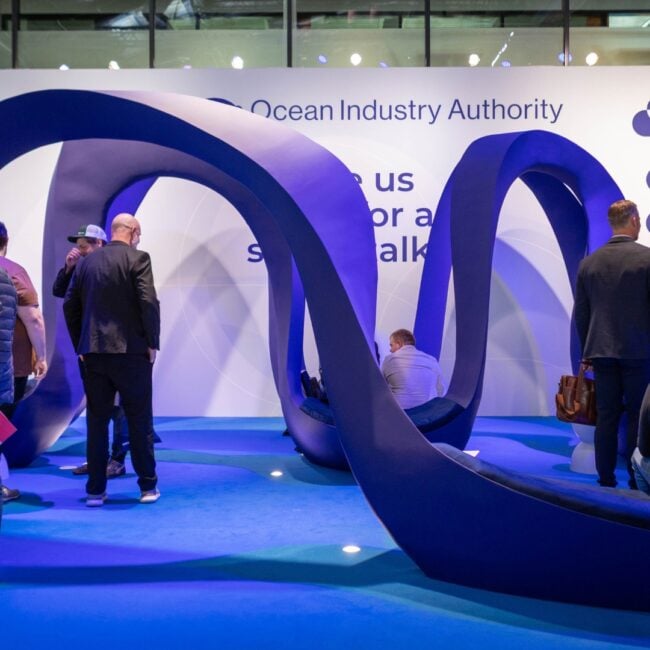
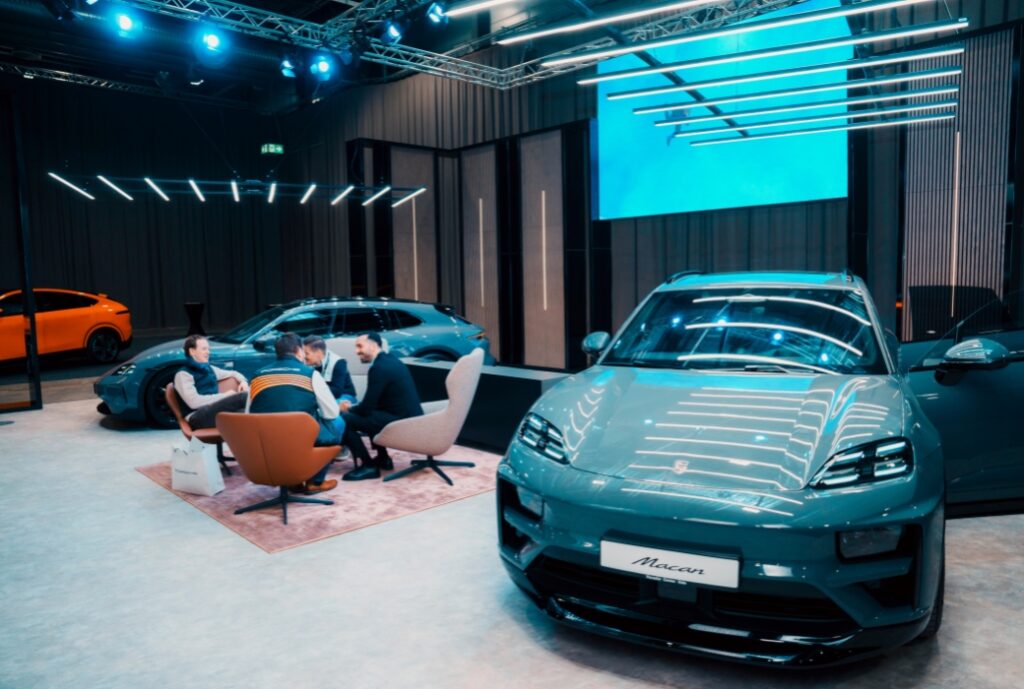
The concept is to make the stand an arena that actively works for you, and the design ensures that you both stand out in the right way and have a functional workplace during the fair.
5. Design
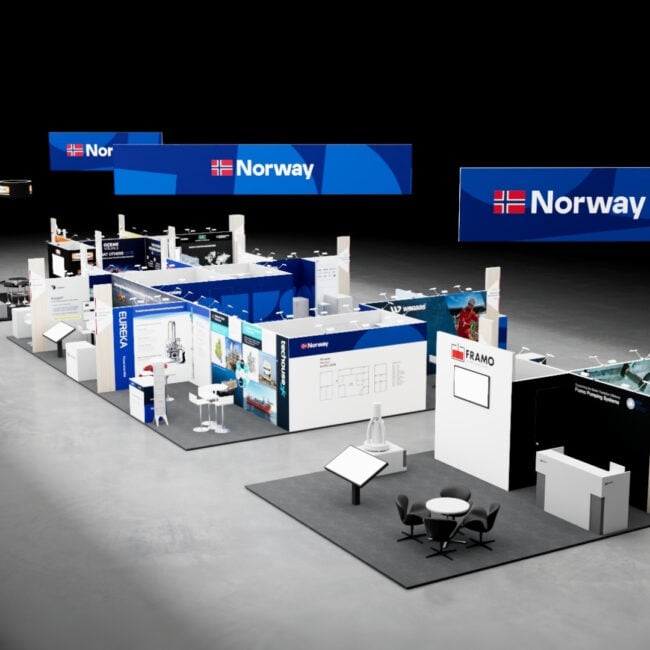
Once the concept is in place, we develop the stand design according to our established design principles:
Hall location
Analysis of stand size, walls, location and audience flows. Here we ensure the correct layout of the space and make sure that the logo, important messages and activities are clearly visible.
Function first
Each element should have a clear purpose – from meeting facilities to demo areas.
Zoning
Backrooms, product areas, dining and meeting rooms – everything is thoughtfully placed for a good and logical flow.
Visual identity
The stand is designed in line with the brand, personality and profile.
Material selection and sustainability
We consider:
- Locally built solutions
- Reuse systems (e.g. beMatrix)
- Banners and frames
- Combinations where appropriate.
We work circularly where possible, reuse materials and offer storage for later fairs.
Interactive solutions
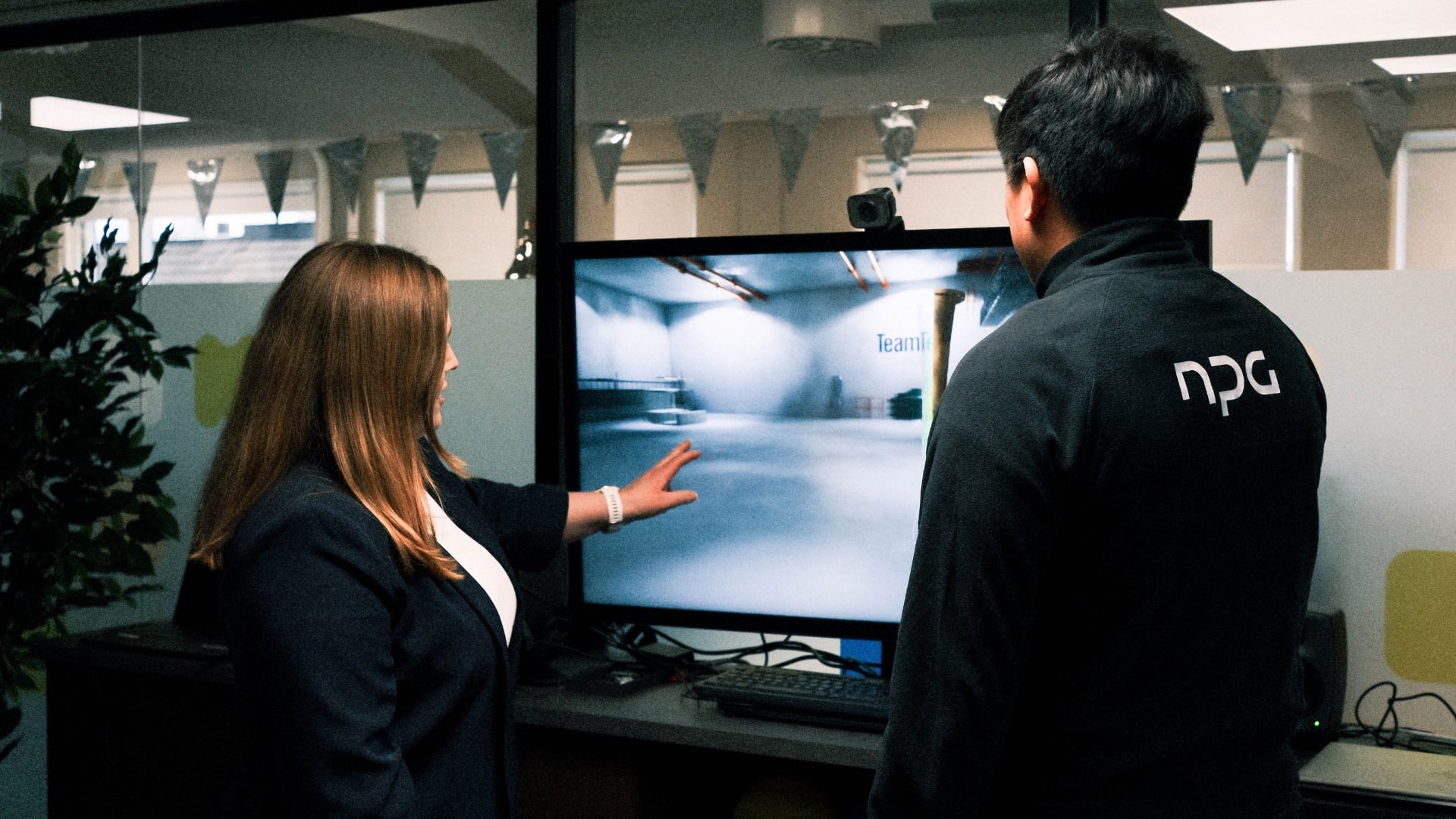
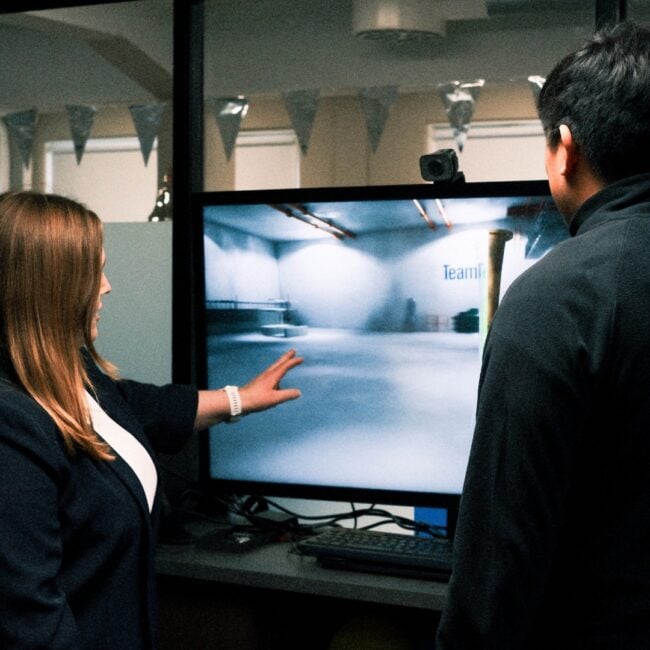
We can develop presentation solutions based on gaming technology, AR or VR – which both engages, simplifies complex messages and reduces the need for transporting physical demo models – with the costs and climate footprint such shipping entails.
We emphasize that the development of this type of tool should have a usefulness and lifespan far beyond the trade fair – for example, in sales situations in everyday work.
6. A safe process from production to dismantling
Once the concept, design and budget have been determined, the implementation phase begins with a project plan and clear milestones.
Production
Planning, approvals, production, purchasing, packaging and preparation.
Installation
Transport, construction and handover of the finished stand.
Implementation
Start-up, activities, media management and any events.
Downrigging
Clearing, returning, storing and recycling.
7. Technical requirements – and why experience is crucial
Trade fairs have many technical requirements that must be met to ensure approval and safe implementation. We handle all documentation, contact with the organizer and quality control.
At international fairs, there are often additional considerations:
- Different safety standards
- Language and cultural differences
- Certification requirements
- Logistics and customs
- Local building and electrical requirements
Typical pitfalls we often see:
- Invalid certifications
- Faulty electrical installations
- Missing approvals
- Unclear rigging times
- Logistics errors and unnecessary additional costs
- Suppliers without control over progress
Half of the projects we carry out each year are international. We have project managers who know the conditions in exhibition halls all over the world, and with NPG Exhibition You get a partner who knows the processes - both nationally and internationally, and who ensures quality at every stage.
Understand the dynamics: this produces results
After many years at trade fairs, we see clear commonalities among those who succeed:
Holistic concepts
Clear identity, clear goals and a common thread – not just pretty design.
Design with function
The stand will support dialogue, sales and demonstrations.
Sustainability and reuse
Modular solutions and smart use of materials reduce both costs and footprint.
Clear communication
People need to quickly understand who you are and what you offer.
1:1 meetings
Good conversations and presentations significantly increase conversion.
Trade fair stand with competitive advantage
What separates an ordinary stand from a successful trade show stand is not necessarily the budget, but strategy, clarity and execution.
NPG combines thoughtful stand design, experienced project managers and over 30 years of experience. This gives our customers peace of mind and a clear competitive advantage.
Would you like some advice on an upcoming trade fair project?
We'd love to chat.
Please contact us at npg@npg.no or +47 23 23 41 00.